
One of the questions that always comes up when talking about new industries is that of government regulation. The AI data center industry is not different. In the last few months, local resistance to the buildout of data centers has grown, mainly because of concerns about increase of energy prices and water usage. So, how much should the government be intervening? And how much do we need these data centers.
The advances in artificial intelligence has put data centers in the spotlight. Although, data centers are used by a lot of industries, from hospitals to manage medical records to streaming services to get our favorite shows to our homes, AI has been the main topic of concern. This is not an AI post (maybe I do one later), but a date center one. How many resources are these things going to consume! Does anyone even know?
Electricity demand from data centers is estimated to double or even triple before the end of this decade. And water consumption is also expected to increase dramatically in the same period. And before I keep going, let me say that data center developers and their tenants have not been transparent at all about their plans on building and what that means to those communities.
It is not uncommon to have a data center developer be responsible for the building, the electricity, the land, and most of the operations while the main software companies are tenants for those facilities. Some of them are collocation data centers that rent space and share the facility with other tenants. The ones what have been more on the news are the so-called hyperscalers, which are the big companies like OpenAI, Meta, Microsoft and all those. These hyperscalers have been recently under fire because they are the most visible companies, but all data centers will be resisted to for some time.
One problem that they have is lack of transparency. These companies are not willing to publicize their plans early, I suppose for business secrecy reasons. This allows communities to make the worst assumptions (which may be true for all we know) and this anger creates an active resistance to the data centers. Why can’t we know how much electricity are you going to need, how you are going to get it, how much water will you use, how much will you use from our resources, how many jobs will you be creating or taking away, how many emissions and noise will you be generating, and how much will you be affecting our pocketbooks?
Many of these hyperscalers have been pegging that they will bring their own electricity to power their equipment and many of them are planning “behind the meter” electricity generation. These are essentially power plants that will not be connected to the transmission grid. Although this may be seen as a positive, I think it would be a potential net loss to use all this investment to improve the electrical systems in these communities. In the long term, I think that electrification will continue to grow which means that the United States’ electrical grid and water infrastructure will need to improve. If we can capitalize on the data centers needs and their deep pockets with community improvement, it would be a great thing. At the end of the day, we will need these electrical and water systems to progress. If we can use the data centers capital today instead of having regular ratepayers fit the bill later on, it will allow us to advance.
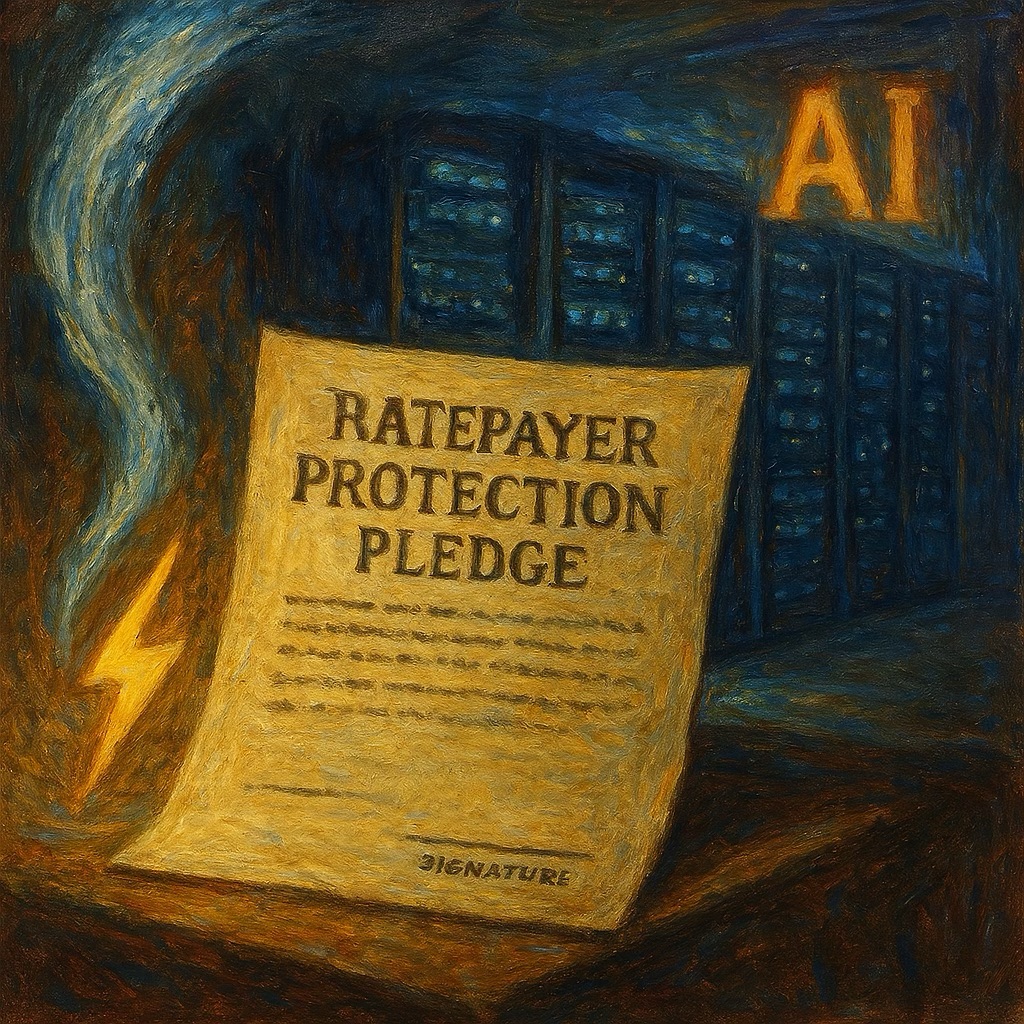
Earlier this year, the White House had a bunch of hyperscalers to sign the Ratepayer Protection Pledge: an “agreement” for these companies to acquire and pay for their own electricity without increasing rates to the communities. Although, a decent effort, this pledge is not legally enforceable, and to be fair to the data centers, they were already doing most of that. Again, this does not capitalize to secure long term community infrastructure improvements. I am not sure if codifying these types of pledges with enforceable policy, is the right call, but I would like to see this companies to better collaborate with local communities to gain their trust and eventually do good things as a team.
I do not know what the level of government involvement will be in the near future, or how much resistance against data centers will be. Recently, Open AI’s Sam Altman’s house was attacked and some data centers and local officials have been threatened, so I suspect resistance will grow. I do think however, that we will need (and want) these data centers, but they have done a terrible job at telling us what their plans are and what the communities can do to help them and, most importantly, what they will do for those communities. This is the single-most important thing these companies can do in the short term… gain people’s trust. The AI conversation of how many jobs will be created or destroyed (and all those important questions) will be a big topic for years to come.
 The Conservative Marxist
Leave a comment